OpenStack public clouds: 7 reasons to become a local cloud service provider

summary
OpenStack is presented as a viable public-cloud stack that cuts TCO enough that, after a break-even point, running your own cloud is cheaper than hyperscalers; Canonical cites 90% the cheapest on price and half its European projects now use OpenStack. Deployments use MAAS and Juju for automated bare‑metal provisioning and operations, moving toward MicroStack (Sunbeam) for near-zero ops. Case studies: a Pakistan public cloud and a hydro‑powered HPC cloud went from two founders to production in ~2.5 years and run successfully with multi‑DC installs and 24x7 managed support.
AI-written summary · about
chapters (16)
- 0:00Introduction and speaker background
- 1:55Agenda and OpenStack overview
- 3:19Hyperscalers benefits and challenges
- 5:06OpenStack growth and market position
- 7:12Benefits of OpenStack public clouds
- 9:41Hybrid cloud and data sovereignty
- 11:48Cost comparison with hyperscalers
- 13:12Business case scenarios
- 16:01Case studies: Pakistan and hydroelectric cloud
- 17:26Case studies: UN and ESA
- 18:50Canonical OpenStack advantages
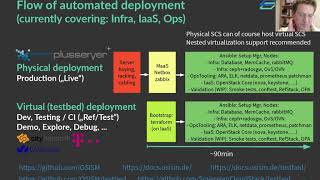
- 21:01Managed services and automation
- 23:13Next-gen OpenStack tools
- 25:21Support and upgrade policies
- 26:45Managed service upgrades
- 27:50Summary and future demand
related talks
 31m7 Reasons to Become a Local Cloud Service Provider
 24mPrivate cloud price-performance analysis
 23mOpen Matters: HP & OpenStack
 18mOpen Cloud: Collapsing the Layers
 20mAre the days of on-premise servers over?
 21mBack to the original mission: an open cloud operating system
 22mMoving a Large Workload from a Public Cloud to an OpenStack Private Cloud...
 15mThe Big Decision when Adopting Openstack as a Private Cloud