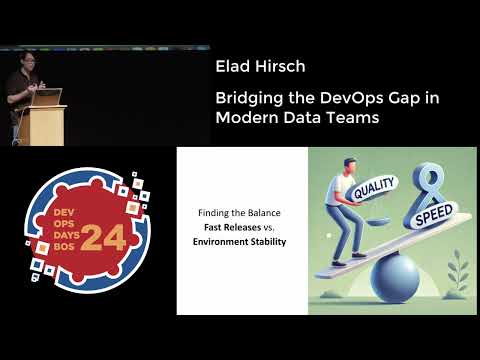
Bridging the DevOps Gap in Modern Data Teams
summary
Argues that data must be treated as code and shows concrete patterns not platitudes: use provision databases with IaC and one‑writer multiple‑reader topologies, push SQL through git with SQL linting and Git pull‑request checks (example risk rules: create in production = manual approval, >100 rows affected = higher risk), rotate credentials with dynamic secrets via Vault, and monitor with query metrics and alerts such as alert: >5s and 10 queries in 15 min to expose slow queries and throughput regressions.
AI-written summary · about
chapters (10)
- 0:00DevOps data gap intro
- 2:36Data ops evolution
- 4:18Data changes as code
- 8:15Infrastructure as code for DBs
- 10:27SQL code reviews
- 13:17Secure DB credentials
- 16:10DB audit logs & queries
- 18:57DB metrics & monitoring
- 21:06DB alerts for DBAs
- 22:08Closing DevOps gap
related talks
 36mUnlocking the Benefits of Database DevOps and Automation
 30mDevOps For Data Teams
 27mDevOps and the Database Bottleneck
 30mDevOps to DataOps
 50mBringing DevOps to the Database
 33mBringing DevOps To The Database
 51mFrom DevOps for data to DataOps
 30mA Devops Approach to Data: A Tale Through the Trenches in Search of a Cloud Data Revolution