There is no such thing as AGI: Understanding multiple intelligences across evolution and development
summary
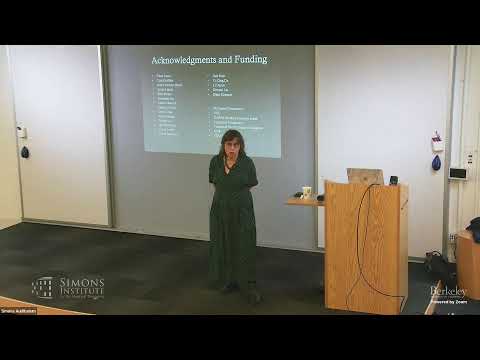
Argues against a single AGI by showing concrete, cross‑species evidence for incompatible cognitive goals: explore–exploit–care trade‑off (juvenile rats and children prefer a shock arm when a caregiver cue signals safety), developmental brains that shift from high plasticity to efficient action (child brains use ~70% of calories), and elder‑mediated cultural transmission in humans and cetaceans. Proposes childhood as simulated annealing childhood (high‑temperature exploration then cooling into exploitation), endorses empowerment (high action–outcome mutual information) and contingent, noisy interaction as testable tools for studying nonhuman intelligence.
AI-written summary · about
chapters (14)
- 0:00Introduction
- 1:51Rejecting Scala Natura and general intelligence
- 3:40Intelligence as niche adaptation
- 6:33Explore, exploit, and care capacities
- 10:32Culture and nonstationary environments
- 13:07Childhood as adaptive strategy
- 19:23Neural development trade-offs
- 22:11Explore-exploit trade-offs
- 27:54Care and teaching capacity
- 32:13Elderhood and post-reproductive care
- 36:10Care versus utility maximization
- 39:20Cultural transmission and elders
- 44:58Developmental diversity and intelligence
- 45:32Q&A
related talks
 45mThe Curious Incident of Developing Artificial General Intelligence
 09mLightning Talk: Intellectual Cognitive Development in Artificial Intelligence
 19mAI: Can we get all the pros with none of the cons?
 09mSmale’s 18th Problem and Intelligence Science 2
 52mThe Agentic Shift- Are We Reasoning, Or Just Retrieving Smarter?
 32mDLGI: Before Things Go Too Far
 26mAI Agents and the Future of Human-AI Collaborative Intelligence
 45mA comparative cognition approach to evaluating AI capabilities